



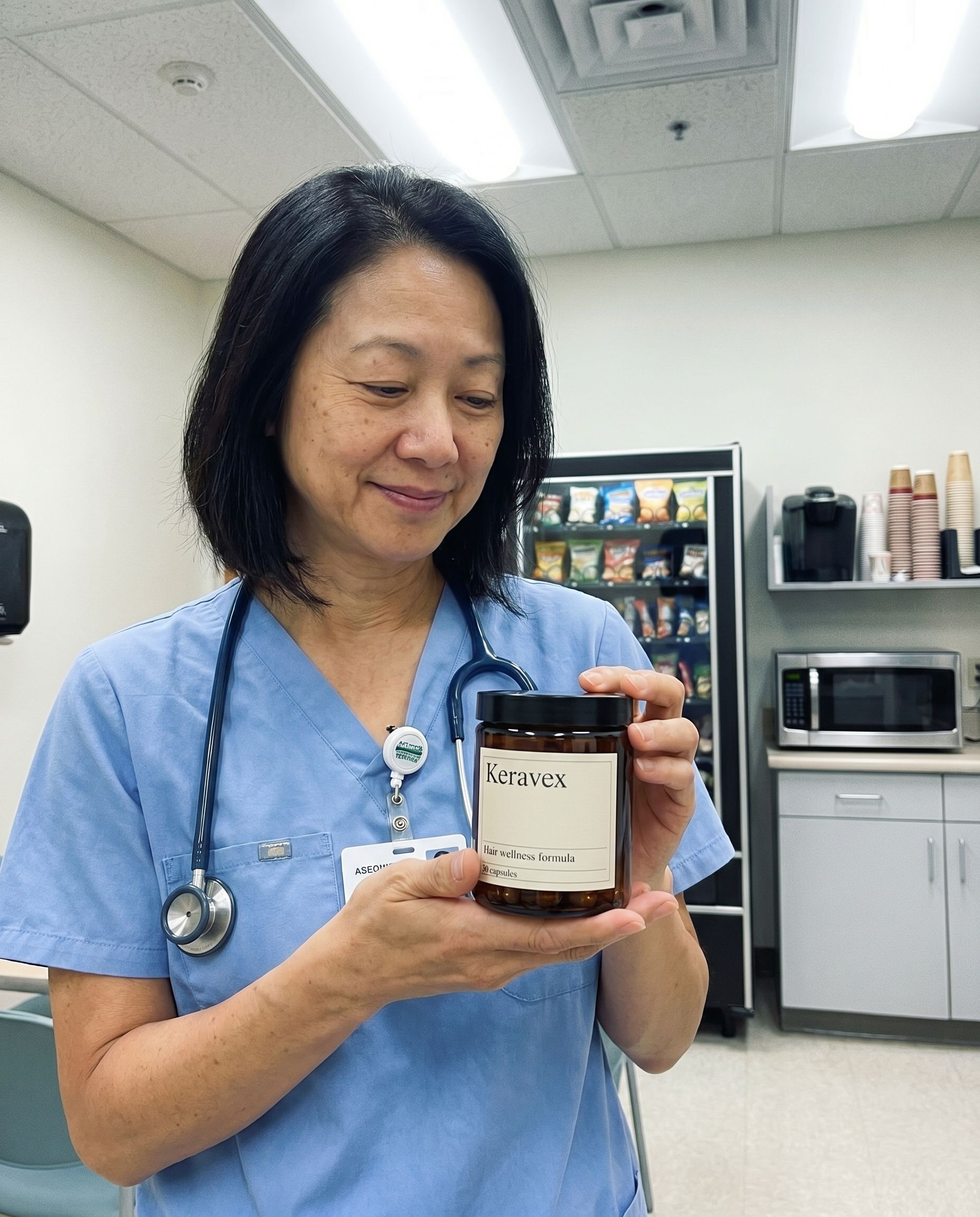
"I prescribed GLP-1 medications to 847 women before I started really listening to them."
I'm Dr. Lauren Matthews. I'm a board-certified endocrinologist with 22 years of clinical practice — most of them spent helping women navigate metabolic disease, PCOS, and the hormonal aftermath of weight loss.
When GLP-1 medications reshaped my practice in 2022, I prescribed them to anyone who qualified. The results were extraordinary. Patients dropping 40, 50, 80 pounds. Diabetics weaning off insulin.
But somewhere around patient 100, I started getting the same complaint at the four-month checkup: "My hair is falling out."
At first I did what most physicians do — I told them it was telogen effluvium, it would self-resolve, and they should focus on their metabolic gains. I prescribed biotin and a multivitamin. I told them to be patient.
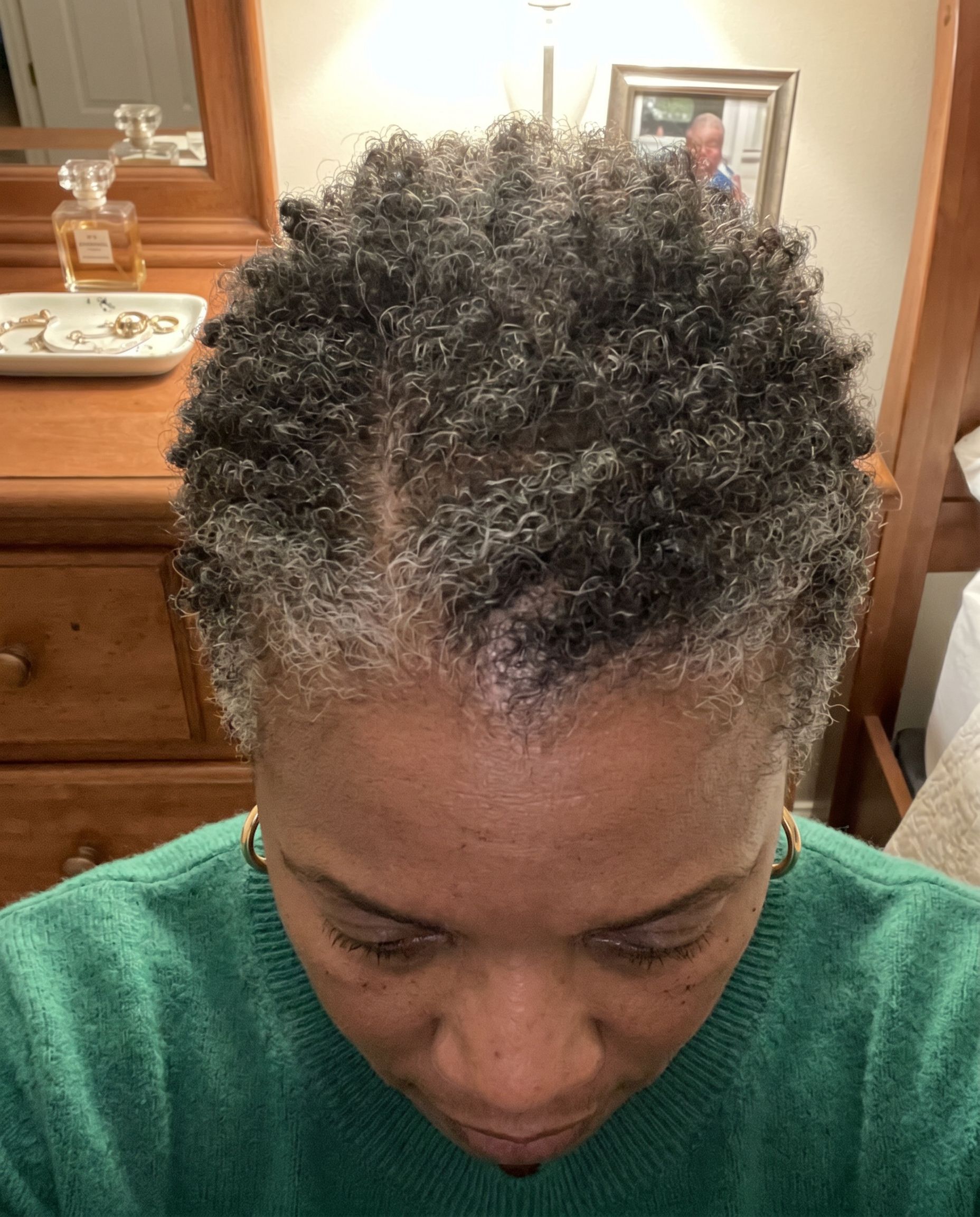
Then a patient I'll call Margaret came in for her six-month visit. She had lost 67 pounds. Her A1C was 5.4. She'd been off blood pressure medication for two months. She also had visible scalp through the part on the top of her head. She was wearing a baseball cap to her job as a real estate broker.
She told me: "Dr. Matthews, I have my body back. But I look in the mirror and don't recognize my reflection. I would rather be heavier than feel this invisible."
That night I pulled the data on every GLP-1 patient in my practice. Roughly one in three women had developed visible hair loss within four to six months. The standard answer — be patient — was clinically correct. The lived experience of waiting 12 to 18 months was something I had completely failed to account for.
I spent 14 months reading every paper I could find on telogen effluvium, hair cycle biology, and the specific nutrient deficiencies that emerge under reduced caloric intake.
What I found changed how I think about GLP-1 hair loss entirely.
There is a window — roughly 90 to 120 days from the first visible shed — where follicles that have shifted into the resting phase are still receptive, still vascularized, still capable of restarting growth on a normal cycle. Inside the window, the right nutrient repletion compresses the full recovery from 12–18 months down to 3 to 4 months.
If you miss it, follicles begin shifting into chronic telogen effluvium, where shedding doesn't self-resolve and recovery takes a year or longer.
I call this The Recovery Window.
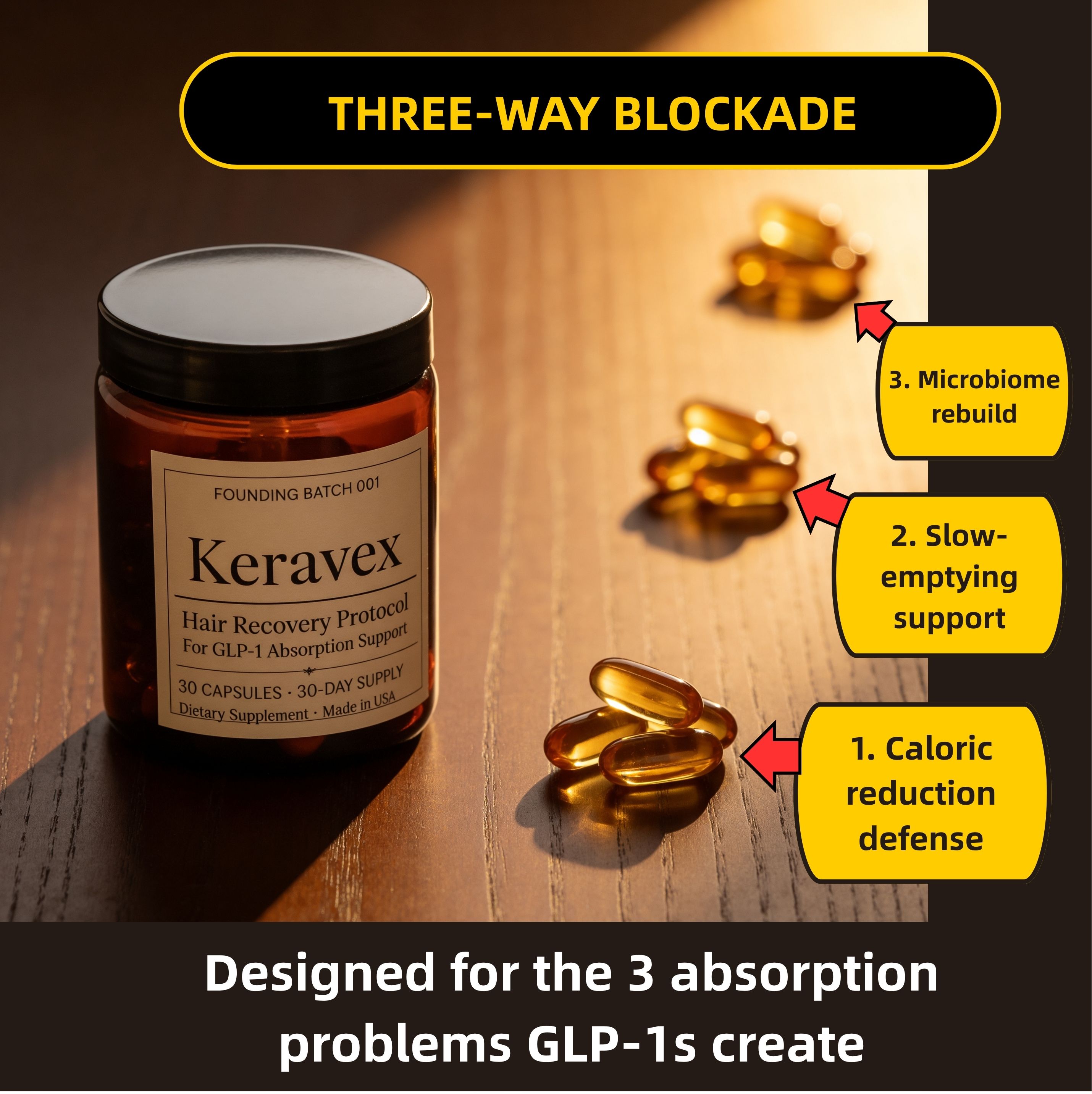
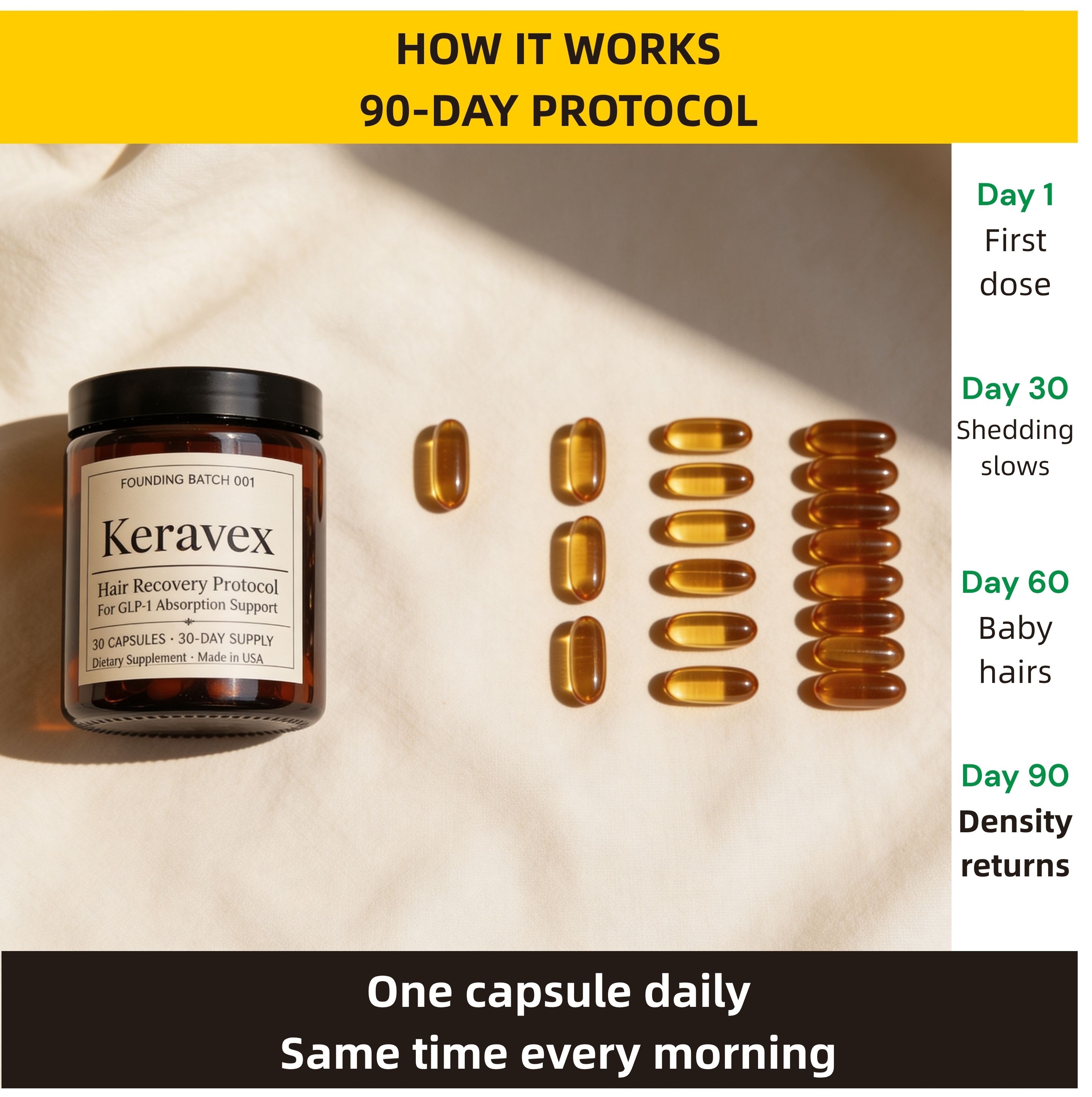
I built The Keravex Recovery Protocol specifically for it. Six ingredients. One capsule per day. Each form chosen for one reason — they are the most bioavailable molecules for a gut operating at 60% of normal absorption capacity.
If you're on a GLP-1 right now, or you've been off one for less than 18 months — your Recovery Window may be wider open than you think.
— Lauren Matthews, MD